.png)
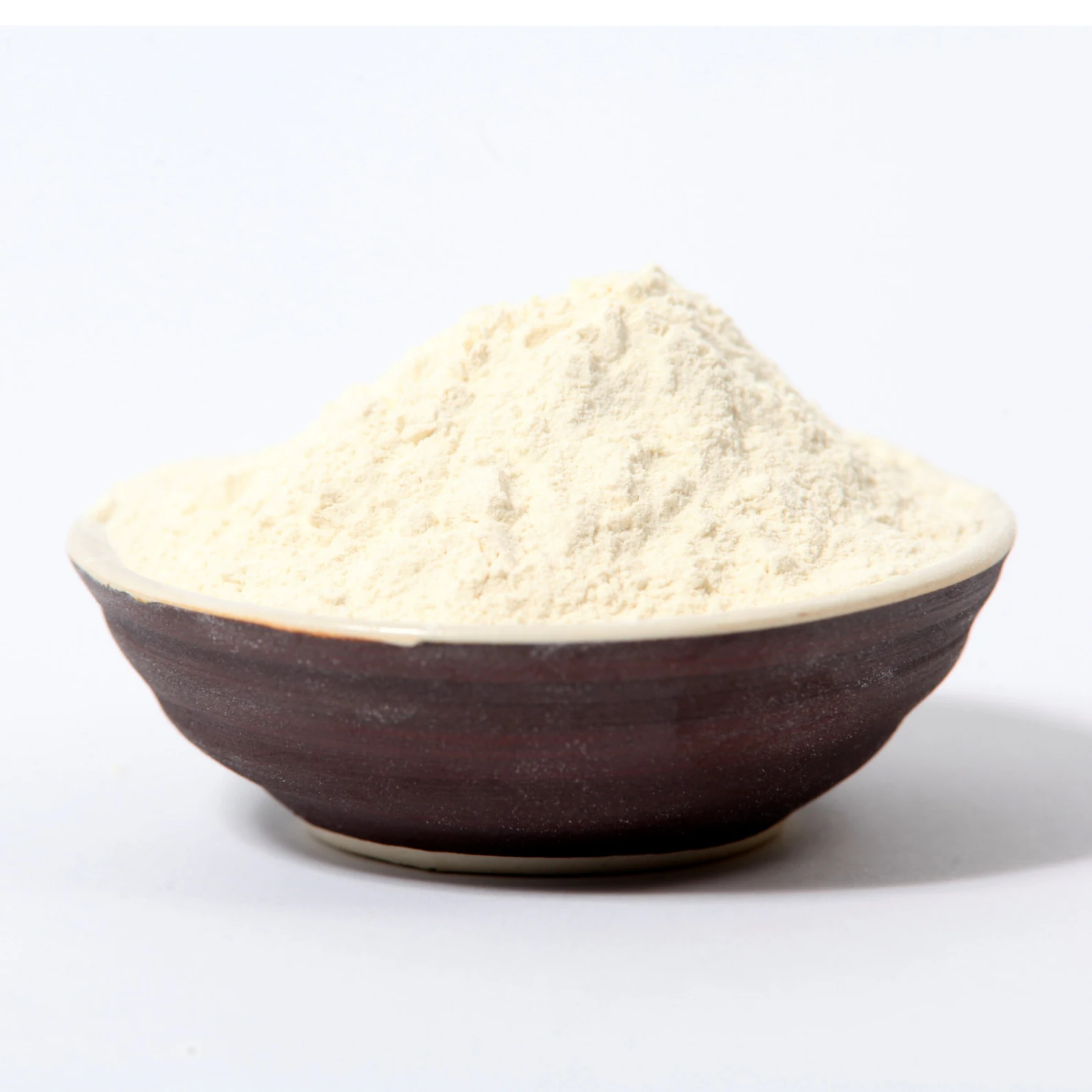
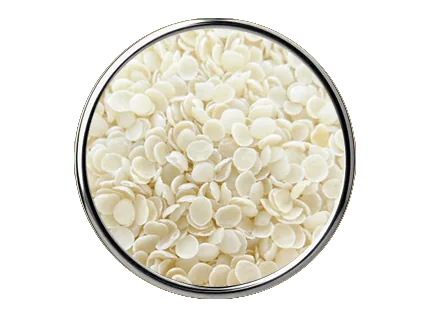
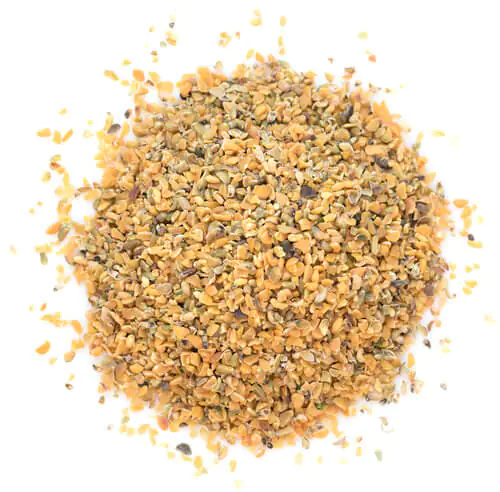
High-quality guar (cluster bean) seeds — raw material for guar splits & guar gum powder.
 FSSAI
 HACCP
 ISO 22000
 HALAL
 APEDA
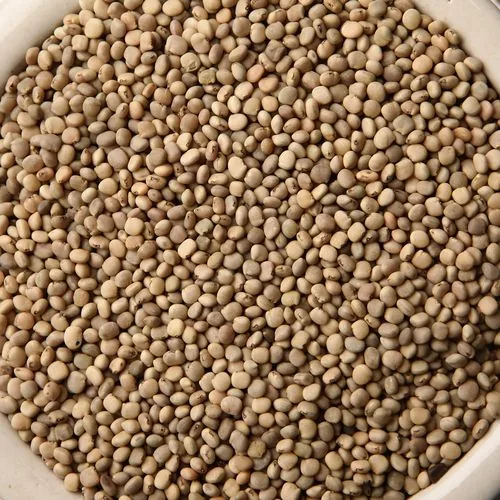
As a certified Star Export House, Sunrise Grain exports raw guar seeds sourced directly from farmers in Rajasthan — India's largest guar-producing region. Our seeds are cleaned, graded, and quality-tested before export, making them suitable for gum extraction, processing, and further value addition by international buyers. . As an established exporter of guar seeds from Rajasthan — India's primary guar growing belt — we supply bulk guar seeds to processors and splitters in India, Pakistan, the US and across Asia who do their own in-house milling.
Guar seed prices fluctuate with the agricultural season and crop yield. Contact our team for current per-ton pricing and available quantities — we typically respond with a quotation within 24 hours.
What a buyer can plan for in a 20 ft or 40 ft container of Guar Gum Seeds, and the packing options we export under.
Common questions buyers ask about sourcing Guar Seeds from Sunrise Grain.
Standard MOQ is one 20ft FCL (18-20 MT typical) for competitive bulk pricing. Trial samples (1-5 kg) are available on request so you can validate quality and specifications before committing to a full container.
15-21 days from confirmed PO to container loading, depending on order size, grade, and packaging requirements. Rush orders can be accommodated subject to current production schedule — please confirm with our team at inquiry stage.
We export to 35+ countries across the Middle East, Southeast Asia, Africa, China, Europe, and the USA. Full export documentation — phytosanitary certificate, certificate of origin, quality test reports — is prepared by our in-house team.
FSSAI, HACCP, ISO 22000, and HALAL certified facility, with APEDA registration. Every batch is tested for the specifications listed above before dispatch. Third-party lab reports, mill test certificates, and specification sheets are provided with each shipment.
Yes. Mesh size, moisture spec, bag weight, outer packaging, and private-label artwork can all be customized to buyer requirements. Minimum customization varies by spec — share your requirement in the inquiry form and we'll confirm feasibility and MOQ.
Yes. Paid samples (1-5 kg) with full specifications and quality report are shipped globally within 7-10 days. Sample cost is credited against the first bulk order.
Hand-picked next steps for buyers researching this category.
What processors should know before sourcing guar seeds from India.
Commercial guar seed varieties grown in Rajasthan — HG-563, HG-365 and RGC-1066 among others — differ in galactomannan content and husk thickness. Average extraction yield from bean to finished powder is 32–36%, with 15–20% husk and 40–45% germ (sold as guar meal / korma).
Export-grade guar seeds are graded by moisture, foreign matter, broken seed percentage and splitting yield (how many kilos of splits a 100 kg bean produces). Premium lots are at least 99% pure with moisture under 10% and foreign matter below 1%.
A buyer purchasing raw guar seeds should plan for roughly 32–36% guar gum powder yield after dehusking, splitting and milling, with the germ fraction (40–45%) becoming saleable guar meal. The remaining mass is husk and process loss.
Guar seeds ship best in jute or PP woven bags with inner liner, in dry sea containers. Moisture is the main spoilage risk — target below 10% at loading. In humid destinations, use desiccant pouches inside containers and avoid prolonged storage above 25°C.
Common buyer questions on this product — matched to the queries buyers actually type into Google.
Cyamopsis tetragonoloba. It is a drought-resistant legume native to the Indian subcontinent and is now the primary commercial source of galactomannan hydrocolloid for industrial use.
India produces more than 80% of global supply, with Rajasthan accounting for 70% of Indian production. Smaller volumes are grown in Pakistan, Sudan, parts of the United States (Texas, Oklahoma) and Australia.
Approximately 320–360 grams of finished guar gum powder per kilogram of raw bean after dehusking, splitting and milling. The germ fraction (about 400–450 g) is sold as guar meal or roasted korma for animal feed.
Guar is a kharif-season (monsoon) crop. Sowing is in June–July after the monsoon rains, and harvest is October–November. New-crop supply typically reaches the market from November onwards.
Reputable Indian exporters document the crop year on the Certificate of Analysis and quality certificate accompanying each shipment. Fresh crop usually commands a 5–10% premium over carryover stock from the previous year.
50 kg PP woven bags with inner liner are the most common. Some buyers prefer 25 kg bags for easier handling, and large processors in Pakistan and the US sometimes take 1 MT jumbo bags.
Yes, on contract-grow basis. Certified organic guar — NPOP, USDA Organic, EU Organic — is produced from guar grown without synthetic inputs. Lead time is longer because supply is tied to a single harvest cycle.
One 20ft FCL (22–24 MT). Larger processors typically take 40ft FCL (44–48 MT) or multiple containers per shipment.